Africa’s World Cup Dream: Talent Has Never Been the Problem, Systems Are
African sides are reportedly producing their most convincing World Cup displays to date, reviving a long-standing debate about whether the continent can finally claim football’s biggest prize. According to the analysis, the shortfall has never been a lack of stars — it has been the absence of structures capable of converting brilliance into championships.
African Milestones From Milla To Hakimi
The report traces a series of defining African moments at the tournament: Roger Milla’s celebrations in Italy, Asamoah Gyan’s devastation after the missed penalty that could have sent Ghana to the semi-finals, and Achraf Hakimi’s cool Panenka against Spain as Morocco made history in Qatar. Despite those flashes of glory, no African nation has lifted the trophy in nearly a hundred years of the competition, which remains dominated by Europe and South America.
Progress, however, has been steady. Cameroon became the continent’s first quarter-finalists in 1990, Senegal matched that feat twelve years later, and Ghana came within a penalty of the last four in 2010 after Luis Suárez’s notorious handball. Morocco then broke new ground in Qatar by becoming the first African semi-finalists. Each run strengthened Africa‘s standing, and the expanded 48-team 2026 World Cup handed the continent ten qualification slots — its largest-ever representation.
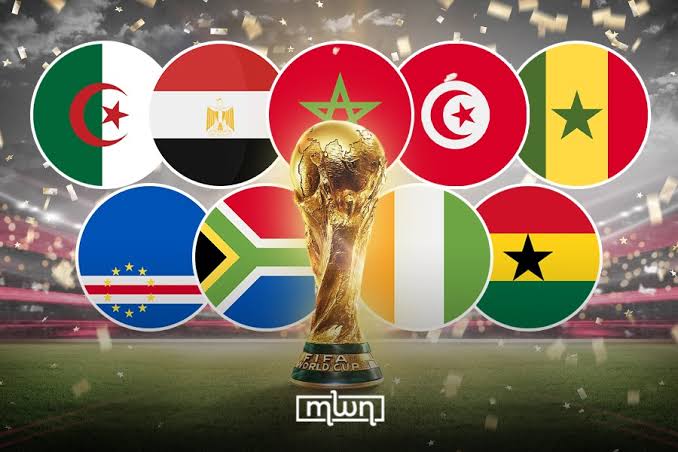
At the current tournament, the report notes, Morocco have maintained their trademark tactical discipline, Egypt have shown maturity under pressure, Algeria have displayed resilience, and Ghana have frustrated higher-ranked sides, while Cape Verde and DR Congo have underlined how quickly the gap is closing. The conversation, it argues, has shifted from participation to genuine possibility.
Why Talents Like Osimhen Need Better Systems
Africa has supplied some of the game’s greatest names — from George Weah, Jay-Jay Okocha, Didier Drogba, Samuel Eto’o and Yaya Touré to Mohamed Salah, Sadio Mané and Victor Osimhen. The central argument is that individual matches are decided by players, but World Cups are won by systems built around them.
That framing matters because sustained tournament success typically reflects long-term planning, infrastructure and organisation rather than raw ability alone. If the continent’s current momentum holds, the question of a first African world champion may soon move from hopeful speculation to realistic expectation.
Stay with BeatzHive News for more entertainment and music news.
On X
Historical World Cup for African teams. 🌍✊🏿 ✅🇿🇦 South Africa ✅🇨🇻 Cape Verde ✅🇨🇮 Ivory Coast ✅🇲🇦 Morocco ✅🇸🇳 Senegal ✅🇬🇭 Ghana ✅🇪🇬 Egypt ✅🇨🇩 RD Congo ✅🇩🇿 Algeria ❌🇹🇳 Tunisia 9️⃣/🔟 teams have qualified to World Cup Round of 32 👏🏾✨ https://t.co/dm6IL1CDxz
— Fabrizio Romano (@FabrizioRomano) View on X
Follow the story: see the latest on X. More entertainment news on BeatzHive News.
You may also like

Riley Moore Says US Will Monitor Nigeria’s 2027 Elections
US Congressman Riley Moore says America will closely watch Nigeria's 2027 general elections, including how the polls are…
Haaland’s Late Goal Knocks Ivory Coast Out of World Cup
Erling Haaland scored an 86th-minute winner as Norway beat Ivory Coast 2-1 in the Round of 32, ending…

Nigerian Lady Regrets Eating Hot Chinese Noodles in Viral Video
A Nigerian woman went viral after nearly burning her mouth eating hot Chinese noodles straight off the fire,…
Burna Boy First African Artist to Top Spotify Music Video Chart
Burna Boy's Shakira collaboration "Dai Dai" hit No. 1 on Spotify's new Global Music Video Chart, a first…